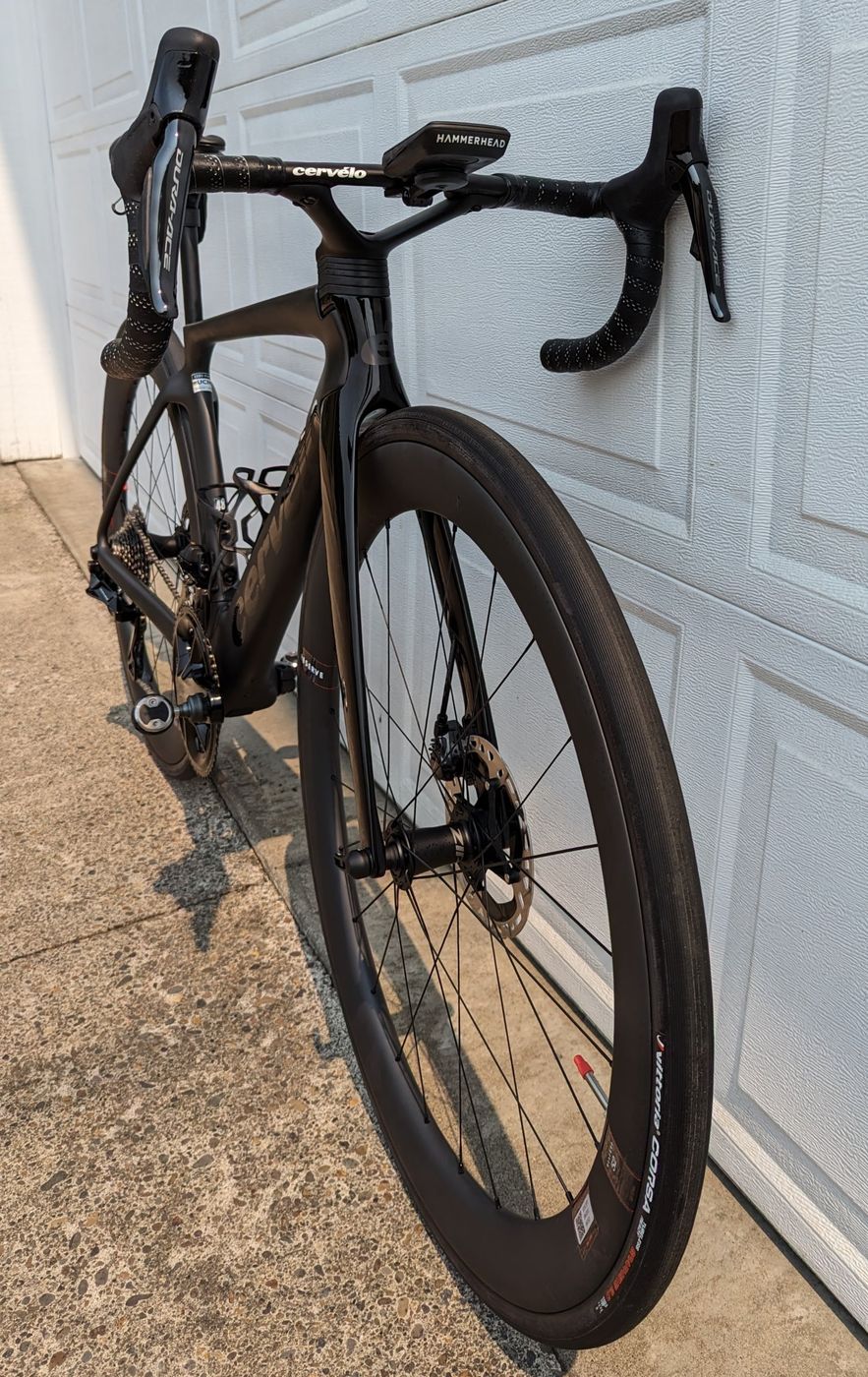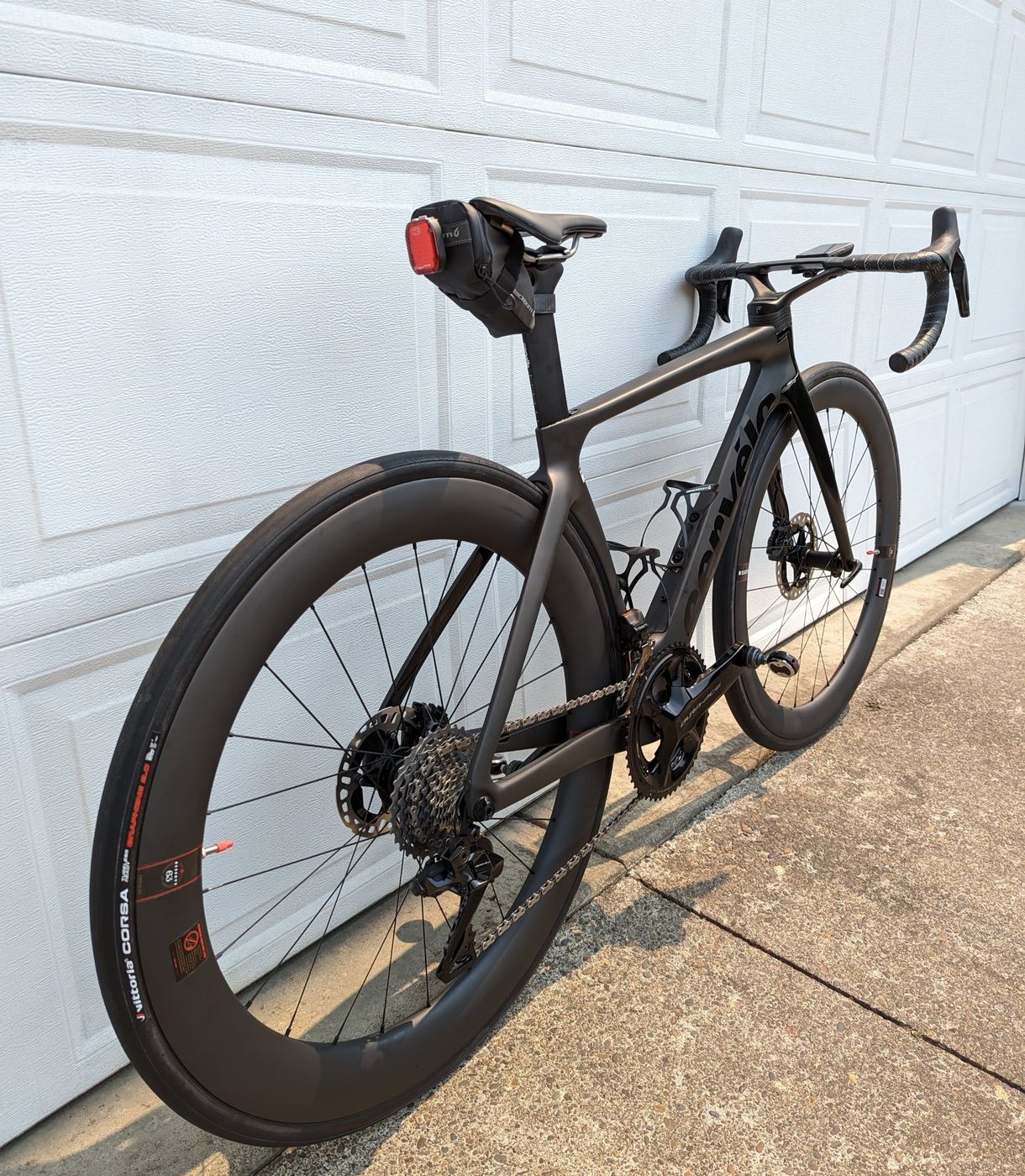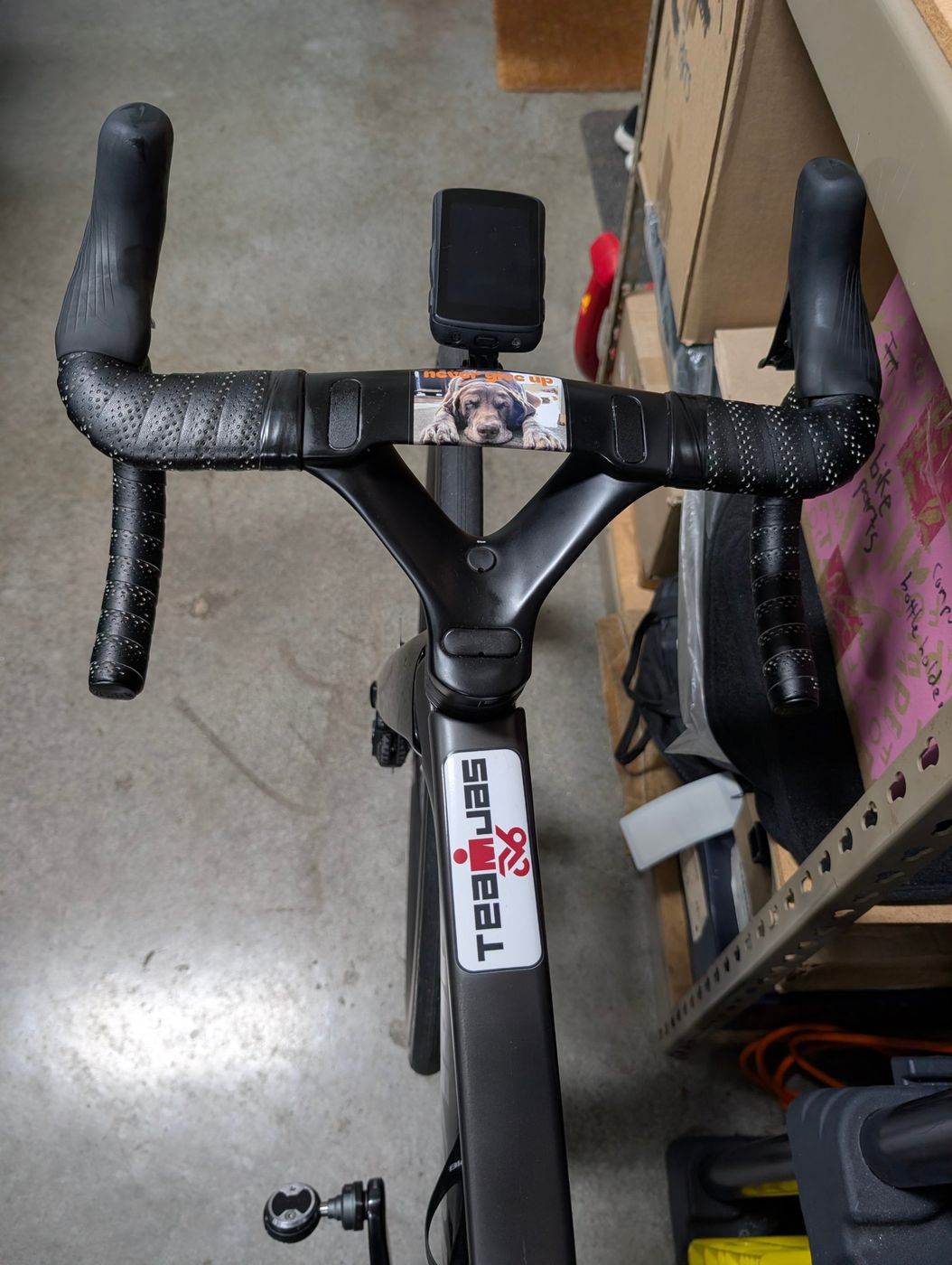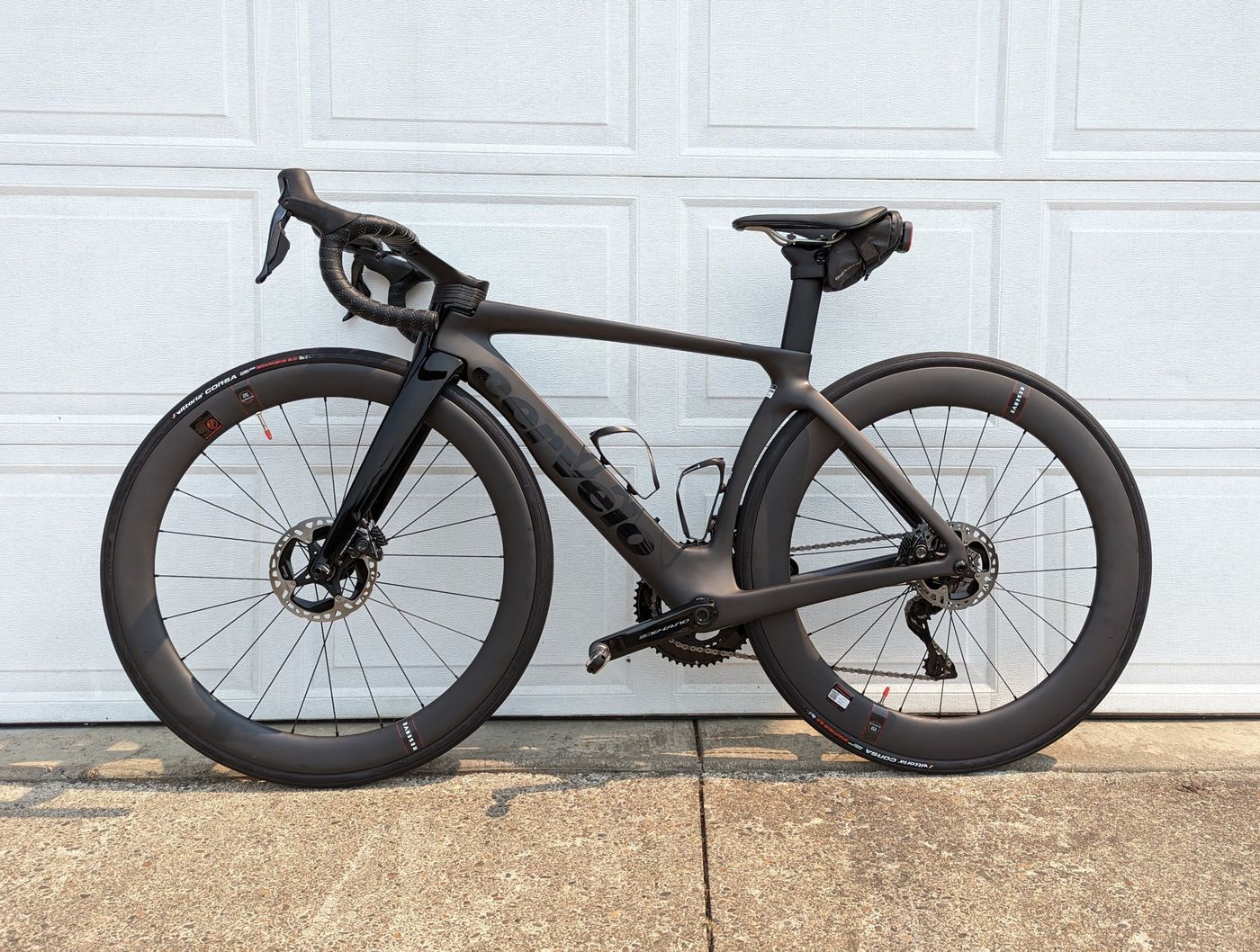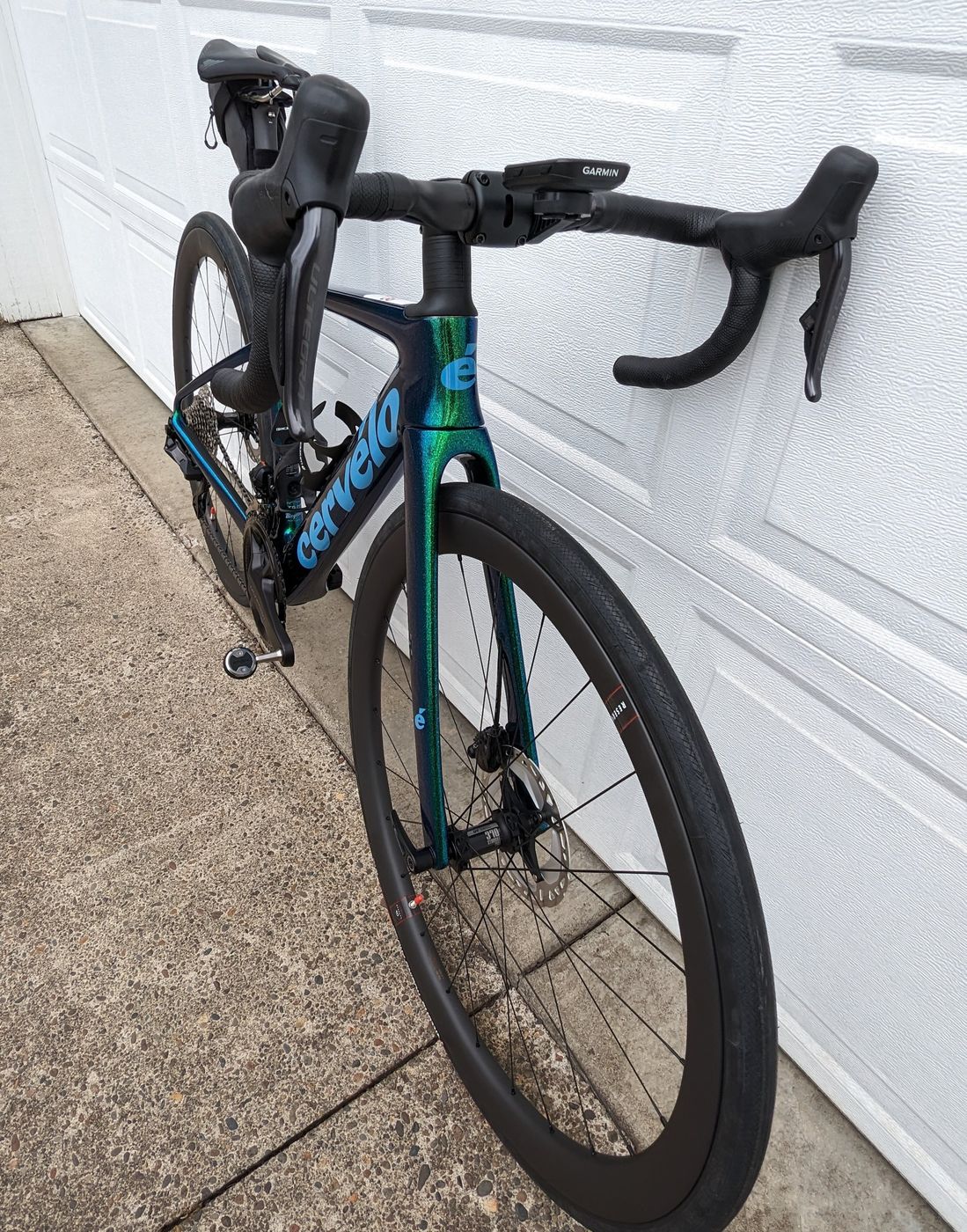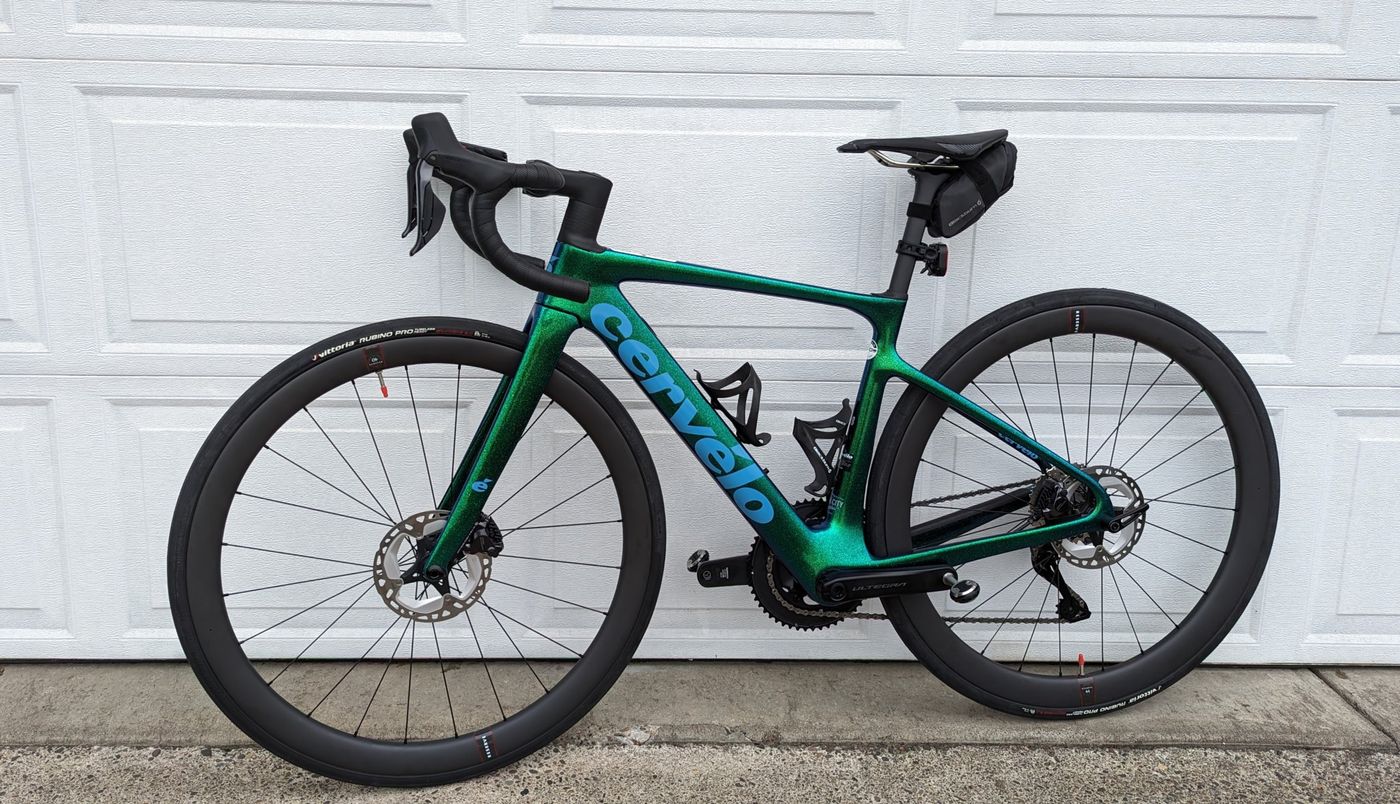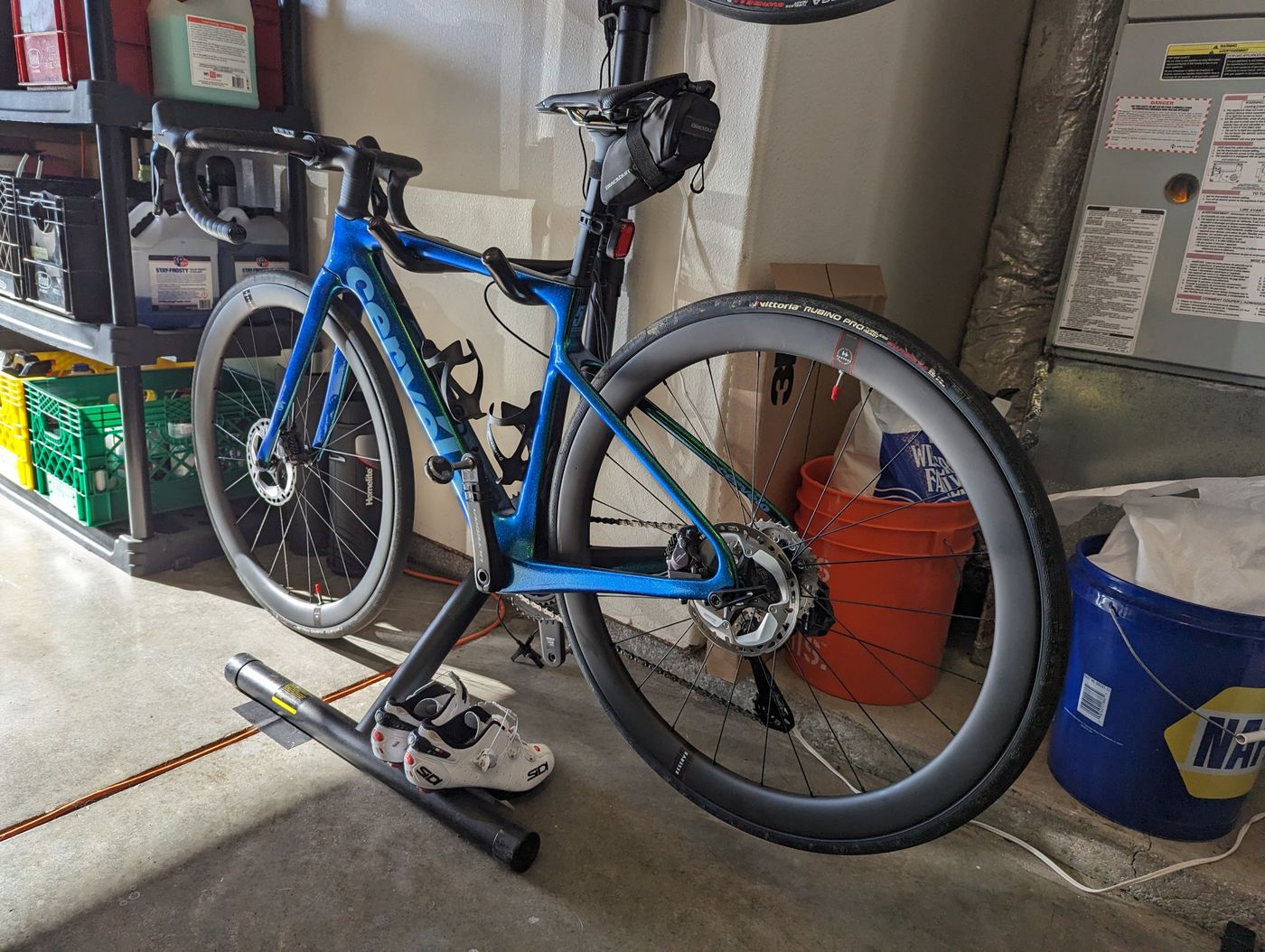
A tour of the bikes in the garage, newest first. Each one has a plain-English summary for anyone curious, and a full parts list for riders who want the details. Sherwick’s bikes are the S5, P4 and Seven. Jami’s are the Caledonia-5, P3 and Calfee.

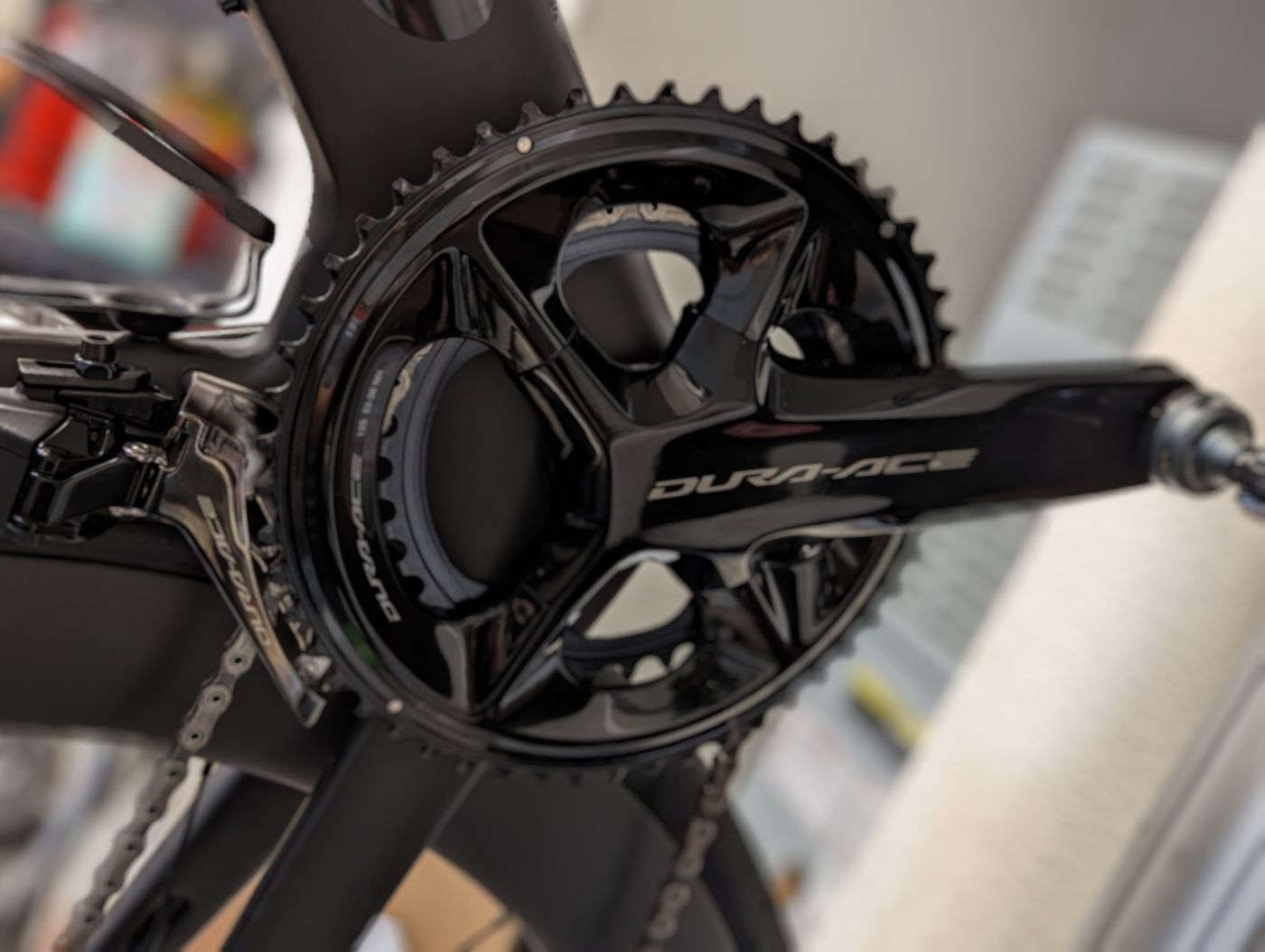
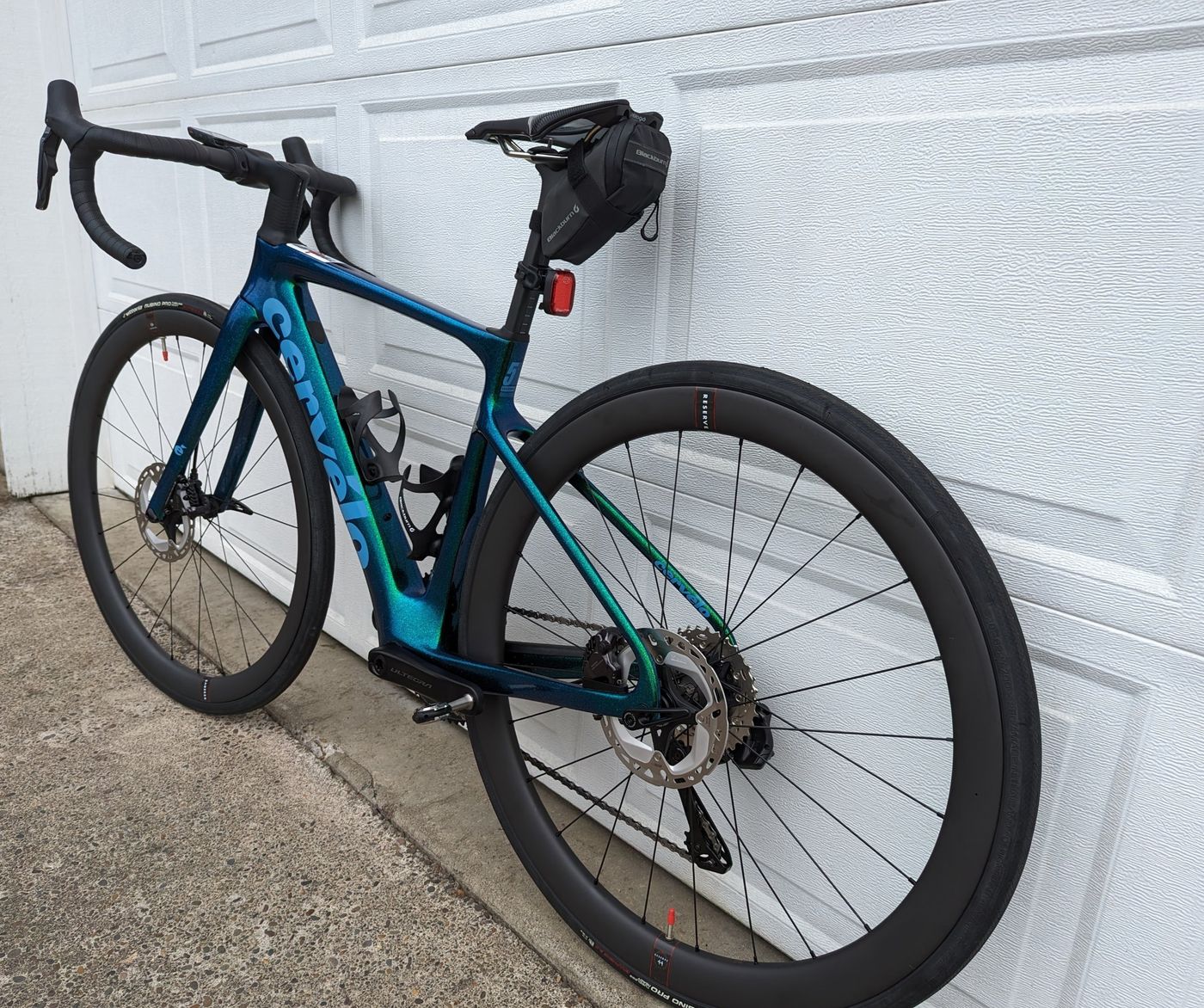
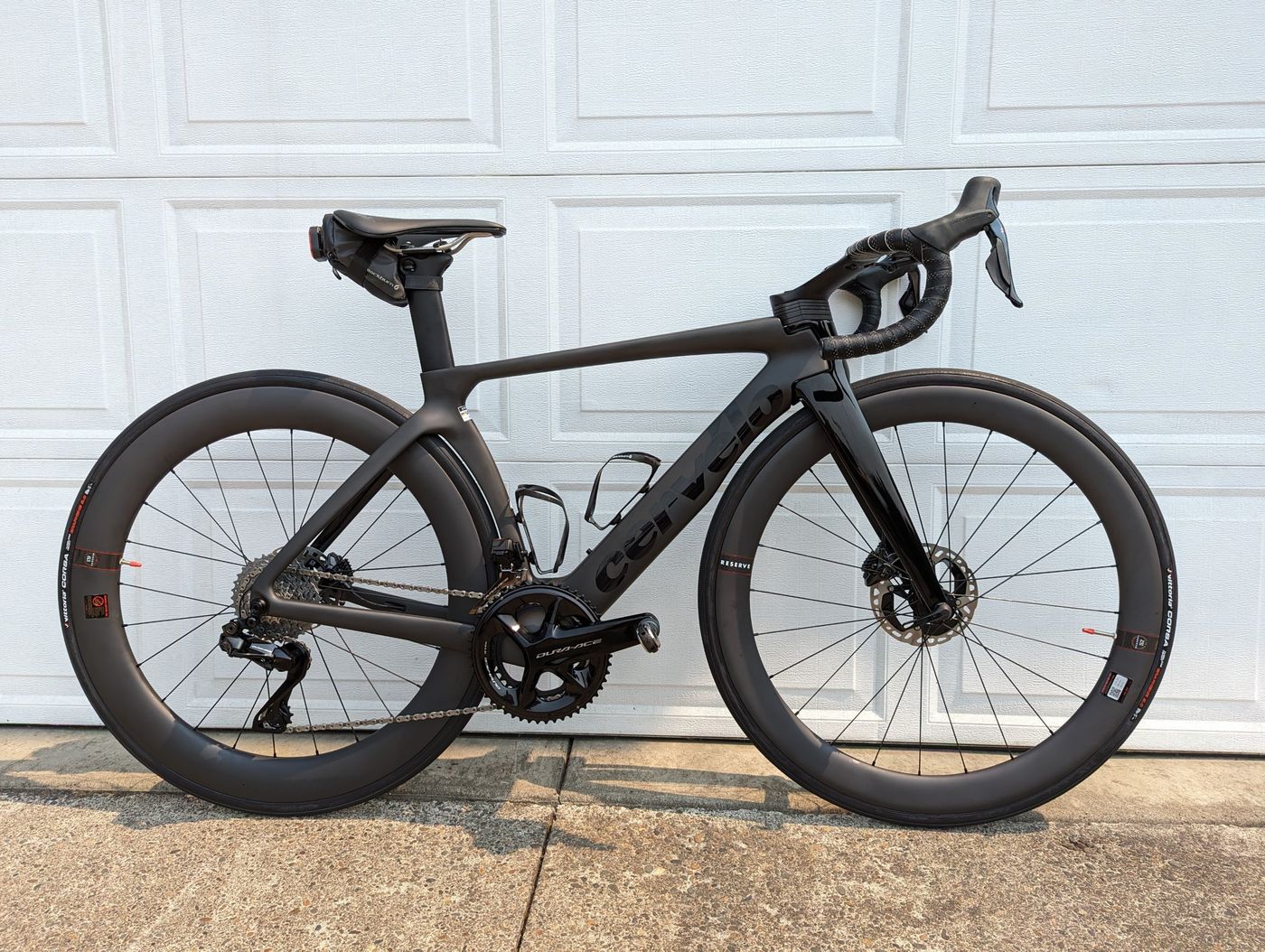
The short version. The S5 is built for one job: going fast on flat and rolling roads. Its frame and handlebars are shaped like airplane wings, and the cables run inside the frame to keep the air flowing smoothly. The deep wheels (52 mm at the front, 63 mm at the back) do the same. Gears change with a button press and the bike can even be tuned from a phone.
The back story. Cervélo was not taking special orders, so this bike came from a waiting list. It was picked up on August 19, 2023. The original SRAM Force wireless build was swapped for Shimano Dura-Ace Di2, with a 165 mm crankset and ceramic bottom bracket.


| Measurement | S5 | P4 |
|---|---|---|
| Saddle height | 70.5 cm | 70.0 cm |
| Saddle to bars | 76.0 cm | 71.0 cm |
| Saddle tip to hoods | 61.0 cm | 63.0 cm |
The P4 figure for saddle tip to hoods was measured to the end of its aero bars, so the two are not a perfect match.
| Crankset | Dura-Ace R9200, 52/36T, 165 mm |
|---|---|
| Front derailleur | Dura-Ace R9250 |
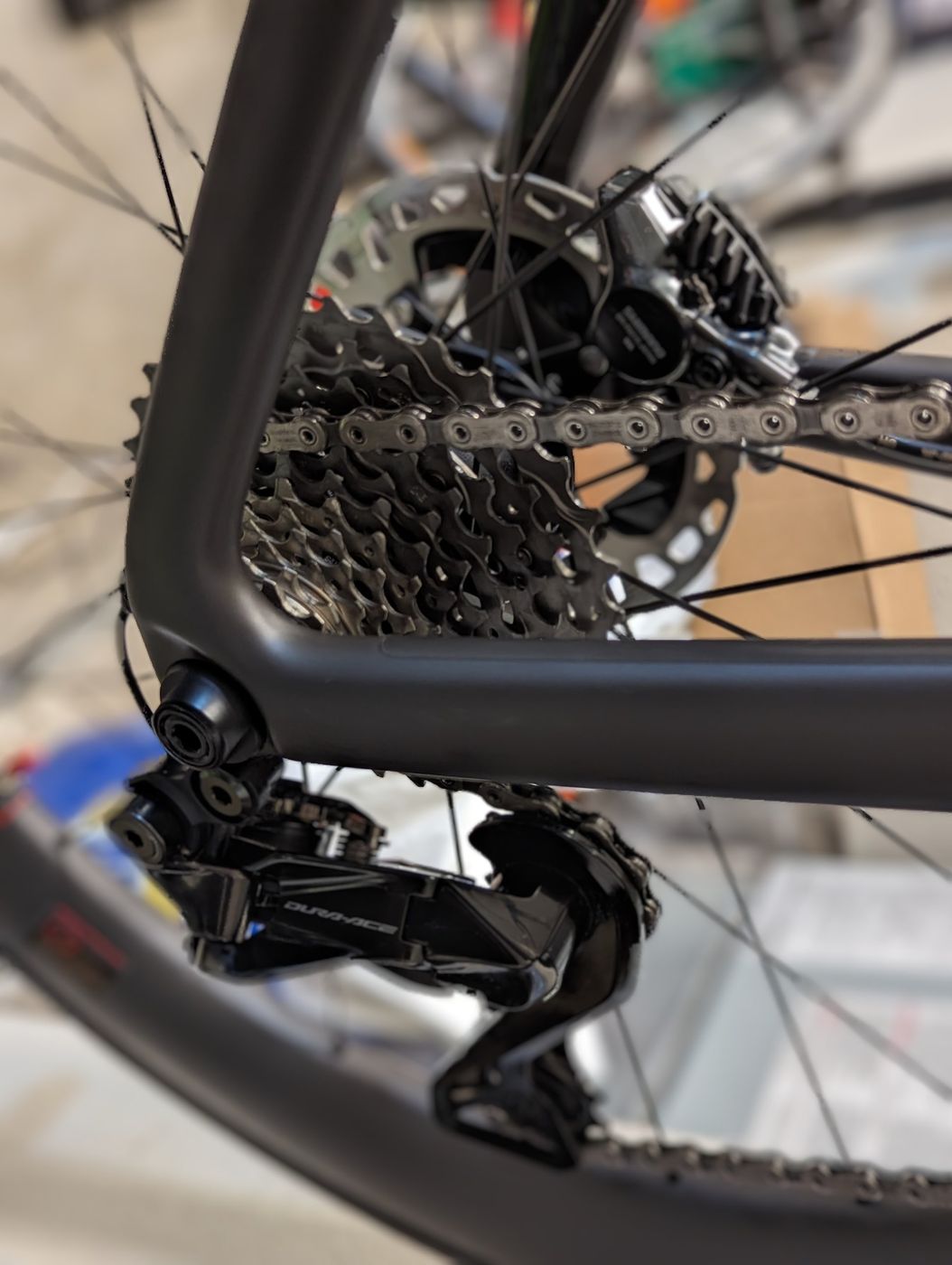
| Rear derailleur | Dura-Ace R9250 |
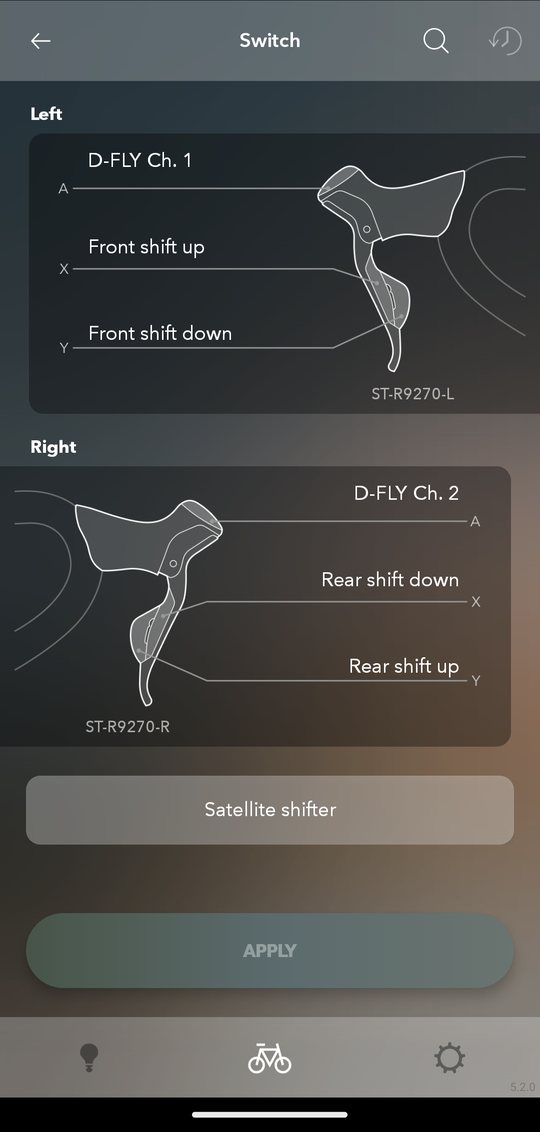
| Shifters | Dura-Ace R9270, 12-speed |
| Cassette | Dura-Ace 11-34, 12-speed |
| Chain | Shimano M9100, 12-speed |
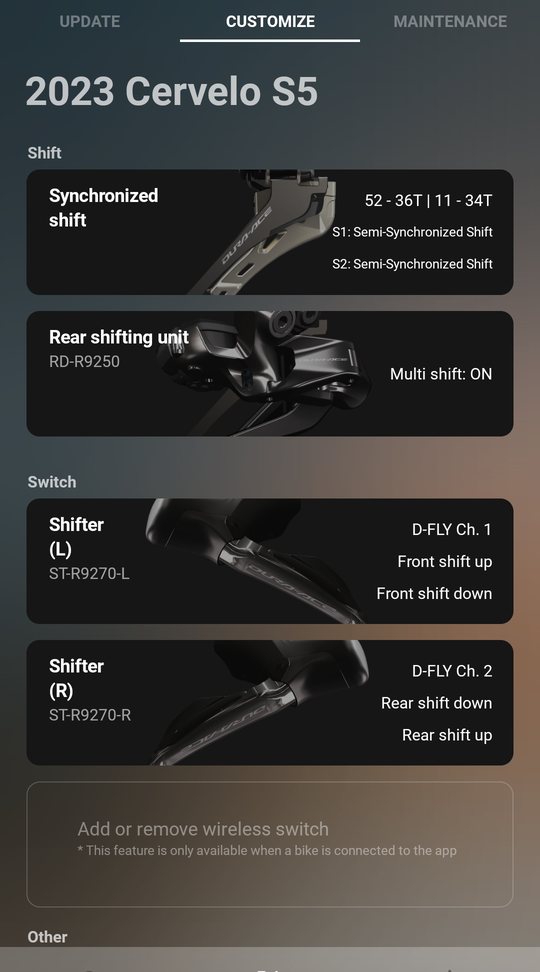
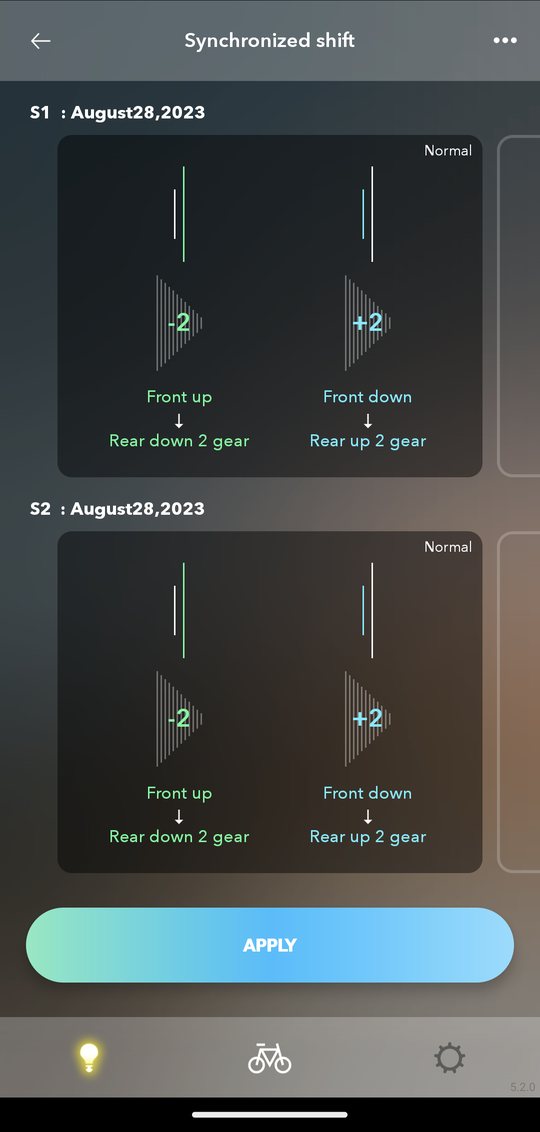
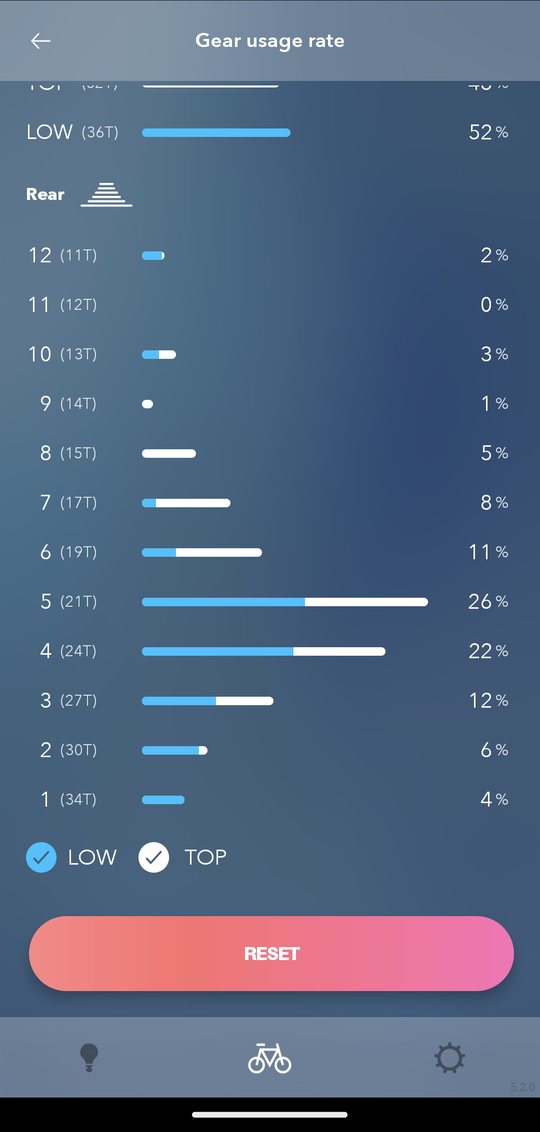
Synchronized shifting is on, and both memory modes (S1 and S2) are set to semi-synchronized. In that mode, an upshift to the big chainring triggers two downshifts on the rear cassette, and a downshift to the small chainring triggers two upshifts on the rear. This smooths the jump in effort, but the front never shifts by itself. Multi-shift is on, so holding a button keeps shifting. The 52/36 setup spends 52% of its time on the small ring. The most-used rear gears are the 21T (26%) and 24T (22%), so most riding happens mid-cassette. The Shimano E-TUBE app shows 12 cogs from 11T to 34T, matching the cassette. Shifting is set to block the small chainring with the smallest rear cog, because the chain would go slack and could fall off. The big chainring with the biggest cog is not blocked.
| Bottom bracket | CeramicSpeed BBright, 24 mm spindle |
|---|---|
| Pedals | Wahoo POWRLINK ZERO dual-sided power pedals |
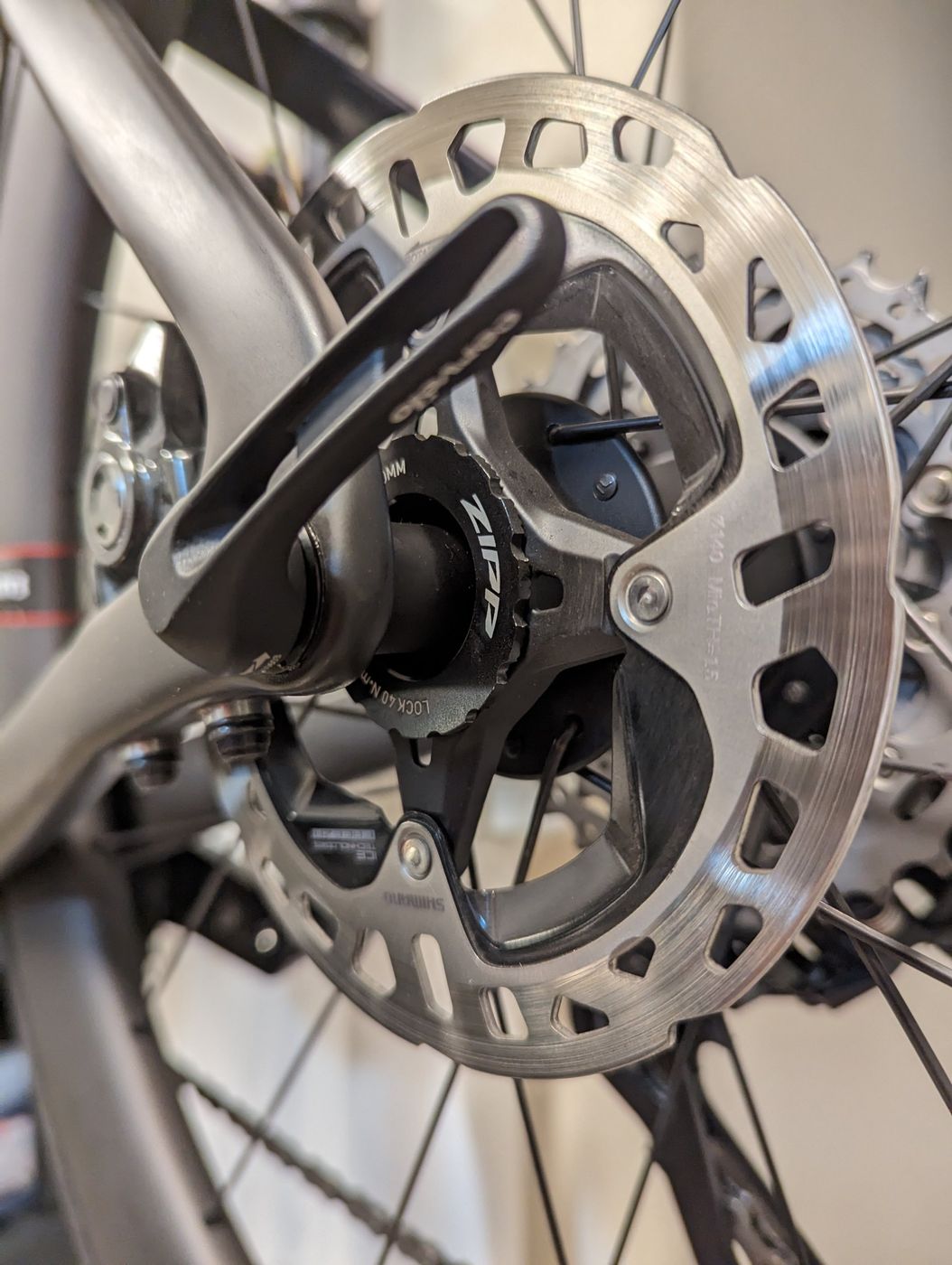
| Wheels | Reserve 52 front (25.4 mm inner width), Reserve 63 rear (24.4 mm); Zipp ZR1 SS hubs, 24 spokes, centerlock, tubeless |
|---|---|
| Tires | Vittoria Corsa TLR G, 700×28c |
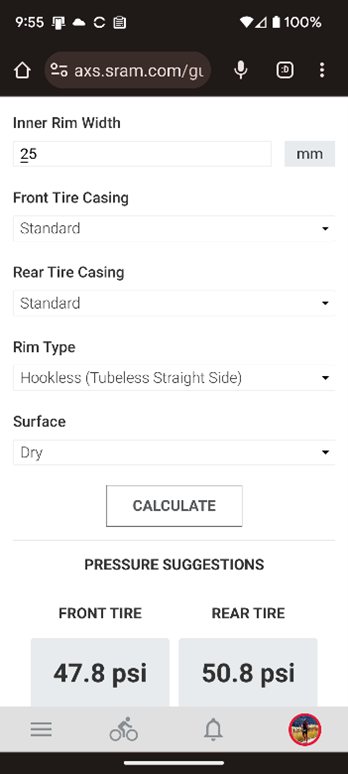
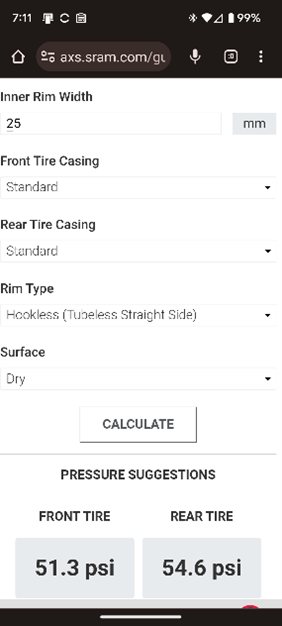
The SRAM calculator, set for a 25 mm inner rim width, tubeless hookless and dry roads, suggests about 48–51 psi front and 51–55 psi rear depending on rider weight. That is far lower than the 100+ psi of older racing tires, and it rolls faster on rough roads and grips better.
| Calipers | Dura-Ace hydraulic disc |
|---|---|
| Rotors | Shimano MT900 centerlock |
| Handlebar | Cervélo HB14 carbon, 39 cm |
|---|---|
| Stem | Cervélo ST35 carbon, 120 mm |
| Saddle | Selle Italia Novus Boost Evo Superflow Carbon |
| Seatpost | Cervélo SP20 carbon |
| Frame / fork | Cervélo all-carbon, tapered S5 fork; sizes 48–58 |
|---|---|
| Headset | FSA IS2 1-1/8 × 1-3/8 |
| Thru-axles | Cervélo aero, 12×100/142 |
| Mounts | Front computer mount, rear accessory mount |
The short version. A bike computer is a small screen on the handlebar. It shows speed, distance, heart rate and a map, and it can also display which gear the bike is in.
| Model | Hammerhead Karoo 2, $399 list |
|---|---|
| Paired with | Dura-Ace Di2 shifting on the S5 (52/36 front, 12 rear gears) |
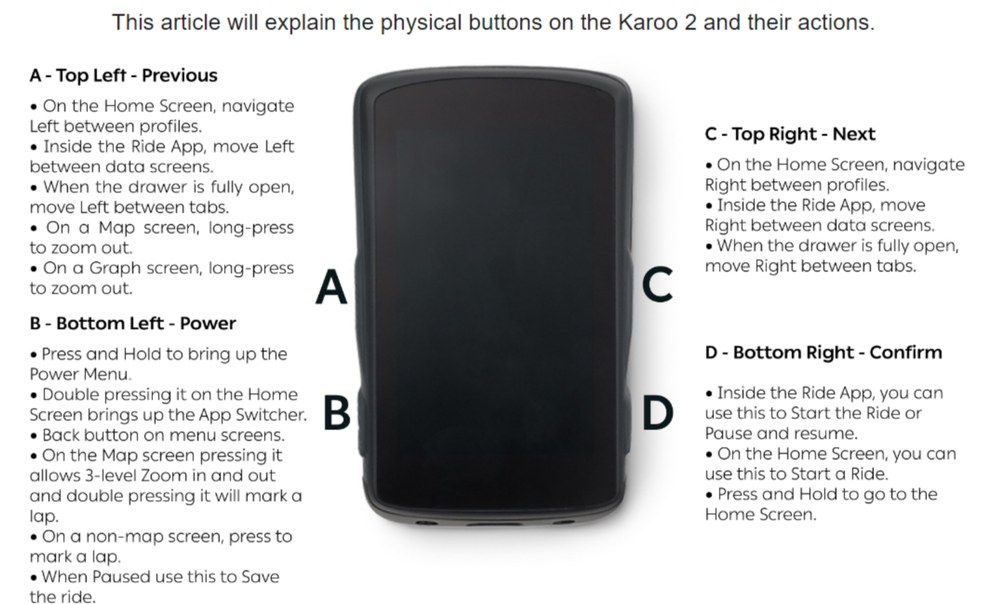
| Buttons | A top left: previous; B bottom left: power and back; C top right: next; D bottom right: confirm, start and pause |
| Profiles | Power + HR, Heart Rate, Basic Profile, Indoor Ride. The screens below are for Power + HR |
| Screen 1 | Map page: speed, 3-second power, heart rate, cadence, map |
| Screen 2 | Data page 1: average speed, max speed, normalized power (NP), max power, average heart rate, max heart rate, average cadence, max cadence |
| Screen 3 | Data page 2: distance to top of climb, percent of FTP, average left/right power balance, grade, lap time, lap distance |
| Screen 4 | Data page 3: distance, Di2 gear, shifting mode, shifting battery |
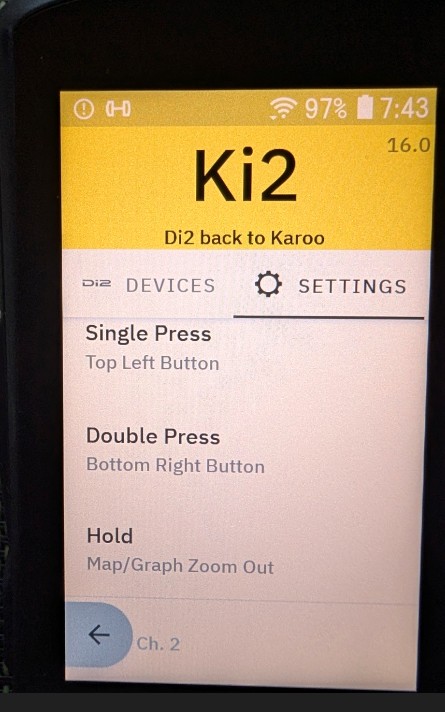
| Di2 shifter buttons | Left shifter: press for the top left button (navigate left), double press for the bottom right button (pause ride), hold to zoom out on the map or graph. Right shifter: press for the top right button (navigate right), double press to mark a lap, hold to zoom in on the map or graph. Set in the Ki2 extension |
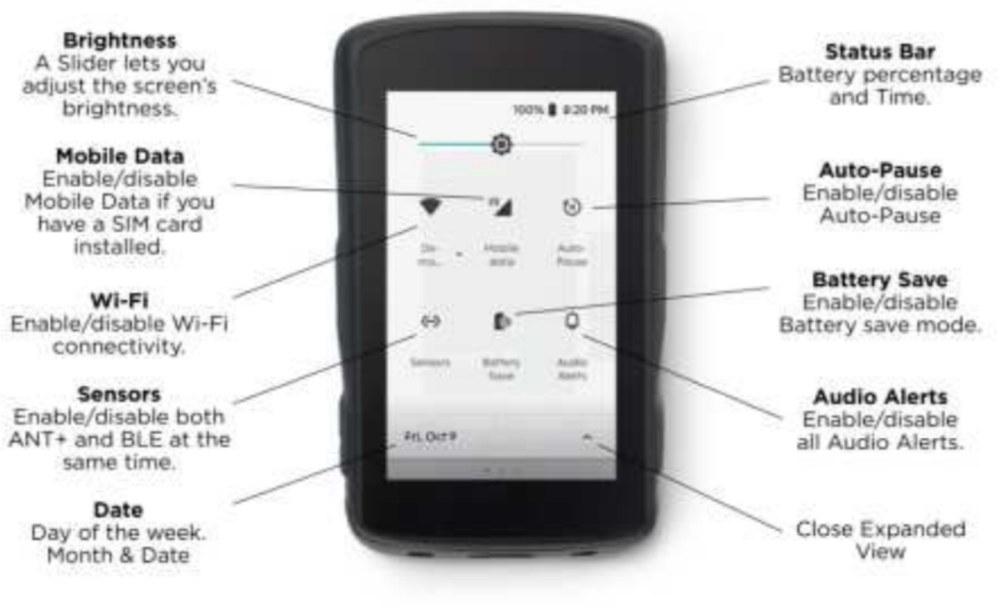
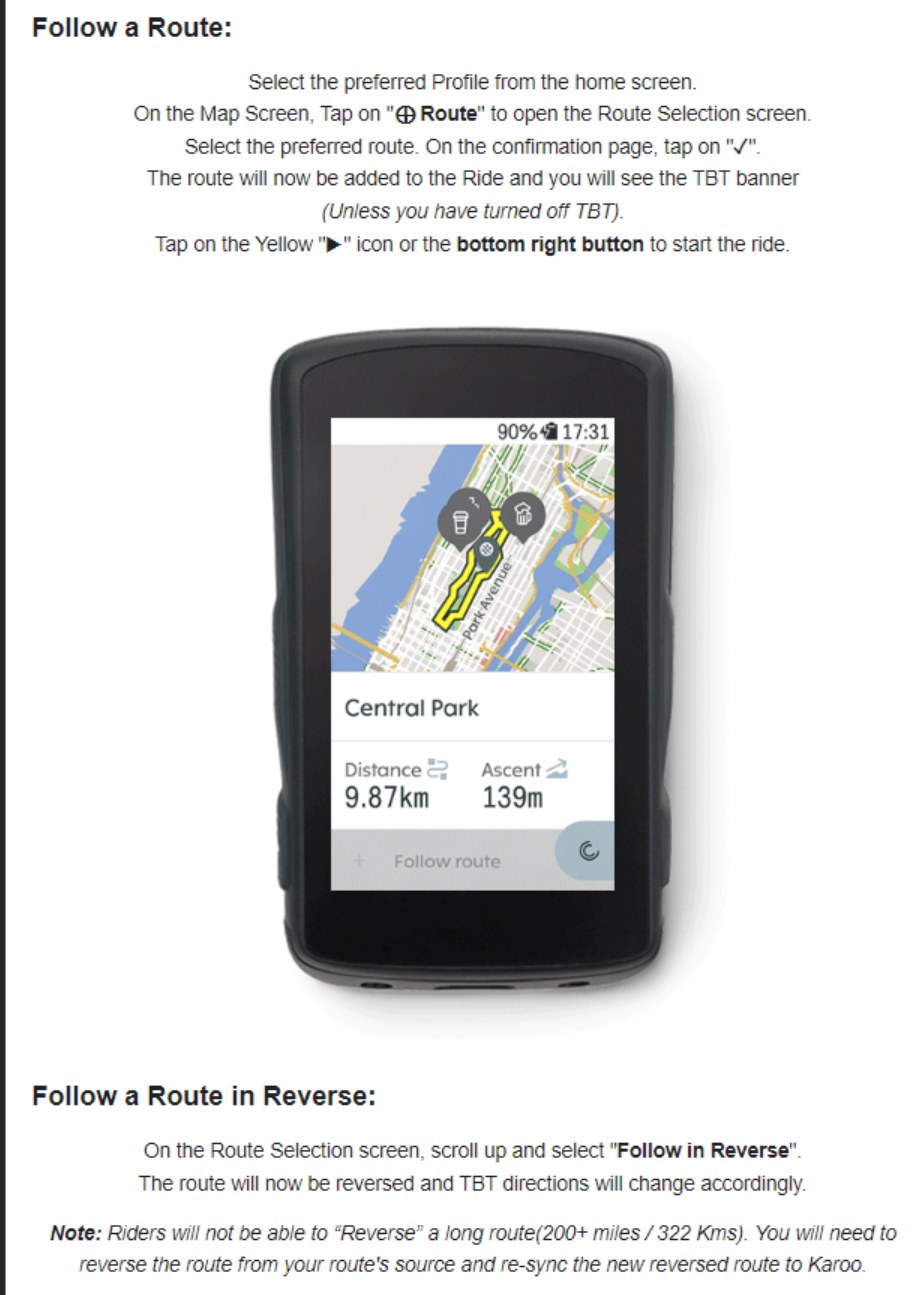
The Karoo can change the Di2 shift mode itself: open its sensor menu, choose the Di2 sensor, then Change Mode. To follow a saved route, pick a profile, tap Route on the map, choose the route and confirm, then press the bottom right button to start. “Follow in Reverse” runs it backwards, but routes over 200 miles (322 km) cannot be reversed on the device.
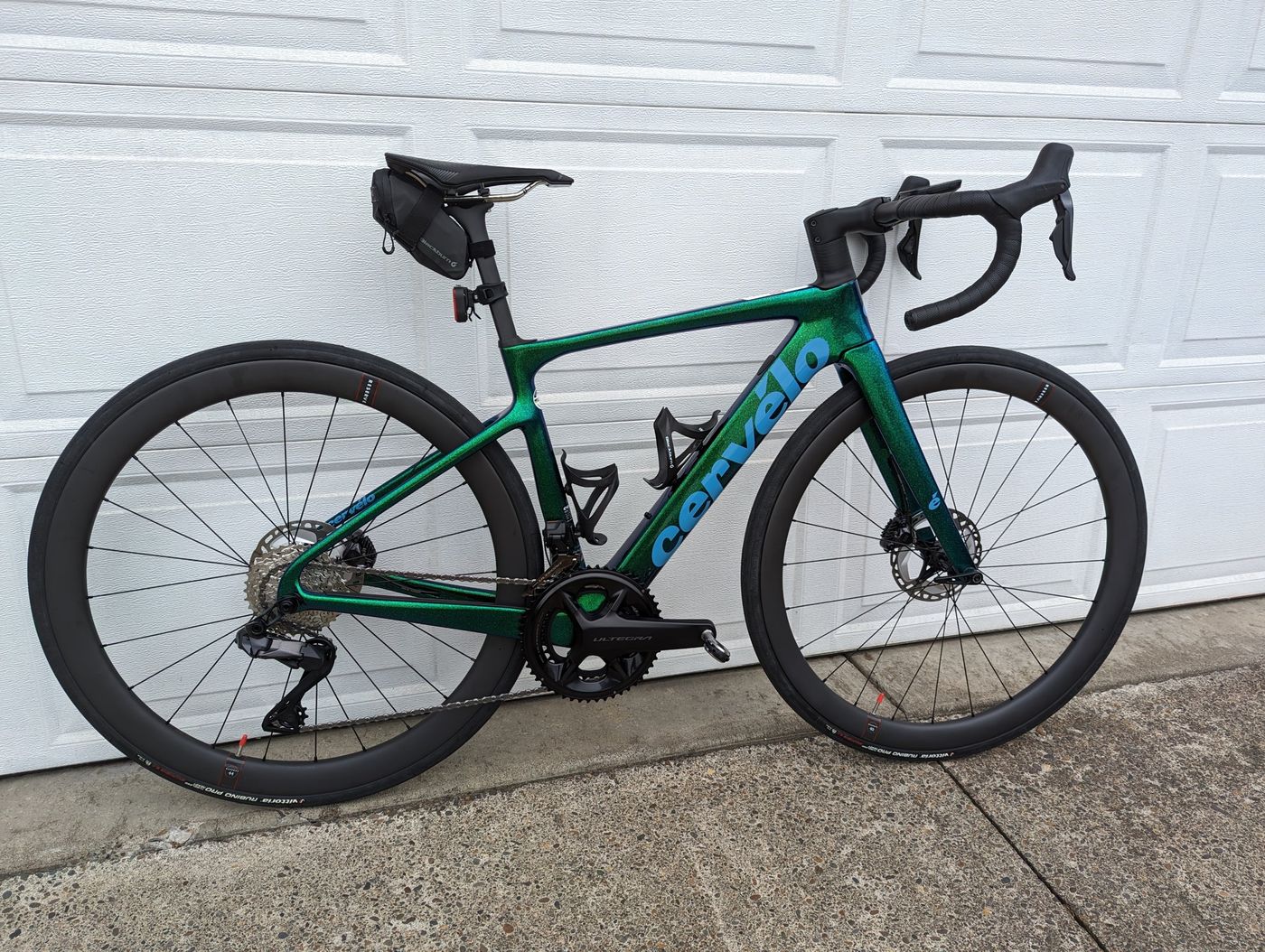
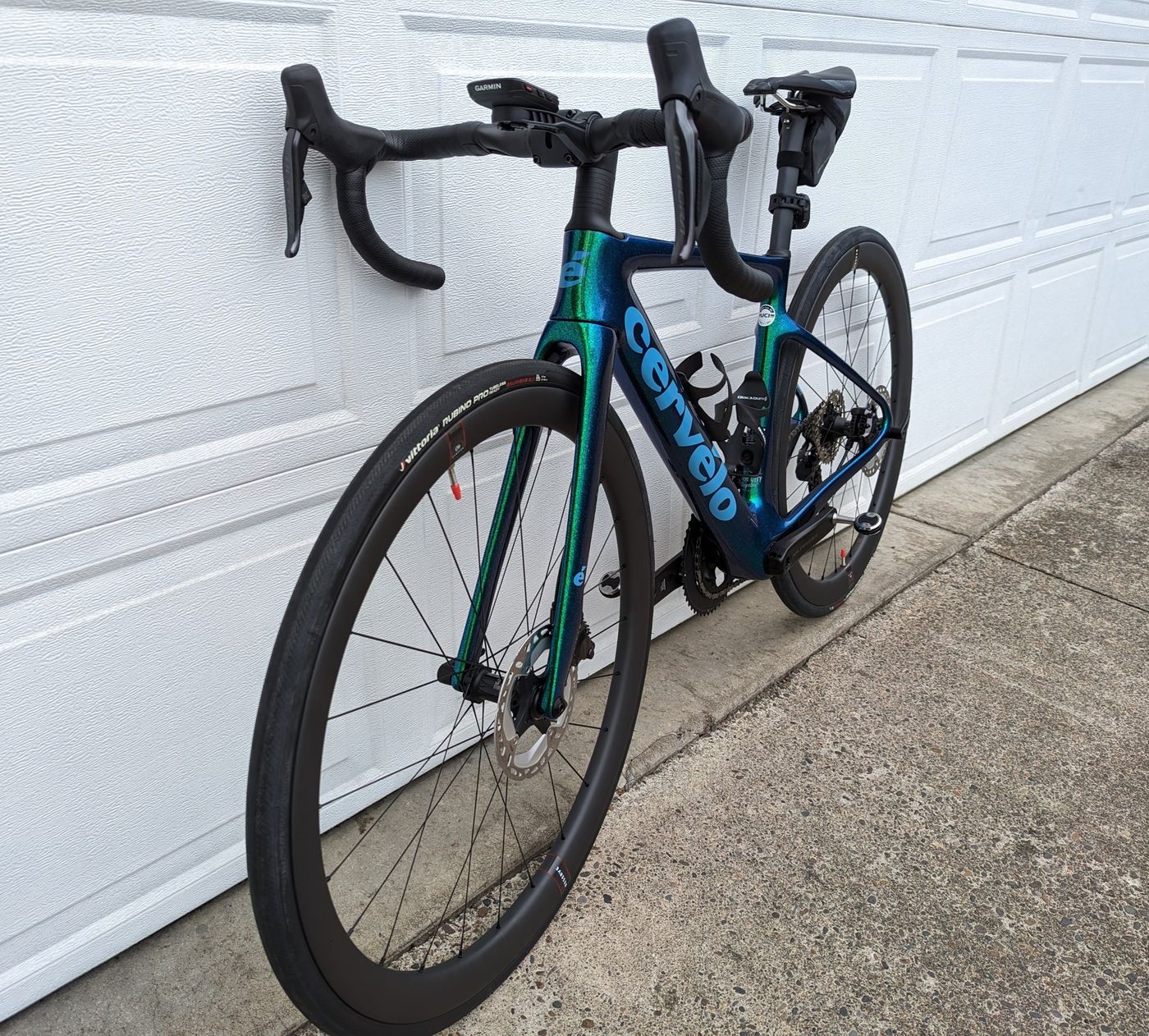
The short version. This is the comfortable sibling. Its geometry sits the rider a little taller and shorter than a race bike, which eases the back and shoulders over several hours. It takes wider tires for a smoother ride and has mounts for removable fenders for wet days. The hidden cable routing is a tidier version of the older Caledonia.
The back story. The Oasis color was being discontinued and only two were left in the world when it was ordered. It was picked up on October 13, 2023.


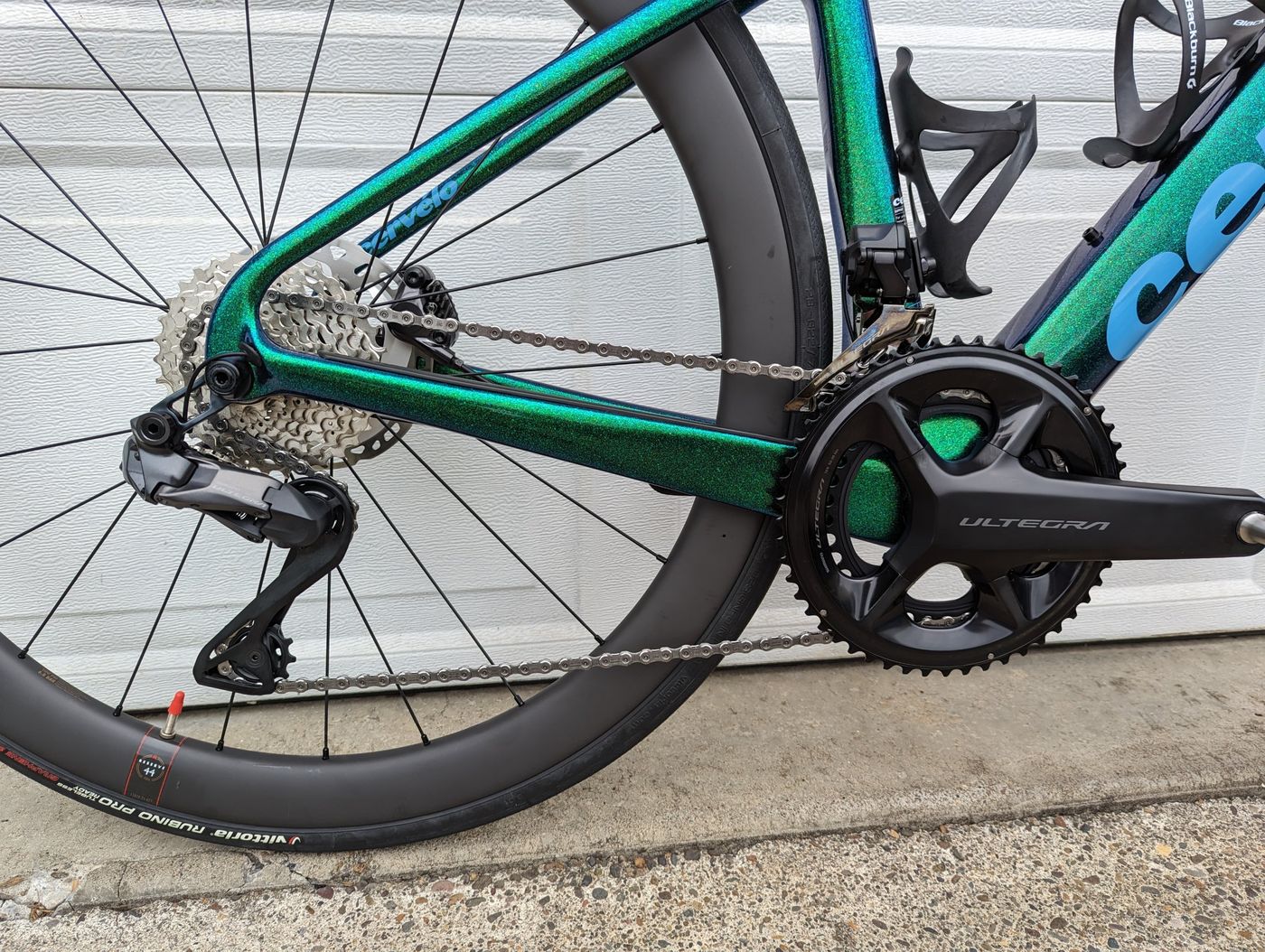
| Crankset | Ultegra R8100, 52/36T, 165 mm |
|---|---|
| Front derailleur | Ultegra Di2 8150 |
| Rear derailleur | Ultegra Di2 8150 (RD-R8150) |
| Shifters | Ultegra Di2 8170, 12-speed (ST-R8170) |
| Cassette | Ultegra R8100, 11-34, 12-speed |
| Chain | Shimano CN-M8100, 12-speed |
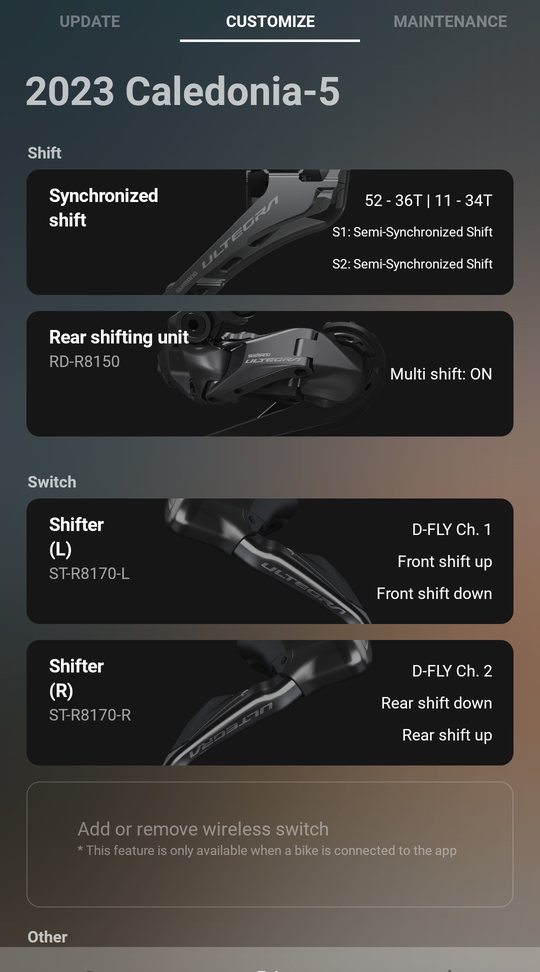
The Shimano E-TUBE app shows 52/36T chainrings with an 11–34T cassette and multi-shift on. Both memory modes (S1 and S2) are set to semi-synchronized, the same as the S5: an upshift to the big chainring triggers two downshifts on the rear cassette, and a downshift to the small chainring triggers two upshifts on the rear. The front never shifts by itself. The left lever moves the front derailleur and the right lever the rear. Shifting is set to block the small chainring with the smallest rear cog, because the chain would go slack and could fall off. The big chainring with the biggest cog is not blocked.

| Bottom bracket | JY-BB 24 (no ceramic bearings) |
|---|---|
| Pedals | Wahoo Speedplay Zero |
| Wheels | Reserve 40 front / 44 rear, DT Swiss 370 hubs |
|---|---|
| Tires | Vittoria Rubino Pro TLR G2.0, 28c (frame fits up to 34 mm) |
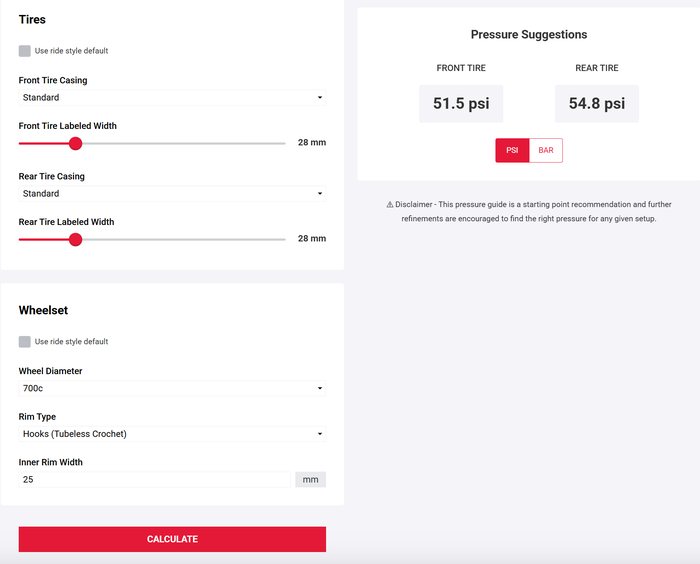
For 28 mm hookless tubeless tires the SRAM calculator suggests 51.5 psi front and 54.8 psi rear.

| Calipers | Ultegra 8170 hydraulic disc |
|---|---|
| Rotors | Shimano RT-MT800, 160 mm |
| Handlebar | Cervélo HB13 carbon, 31.8 mm clamp |
|---|---|
| Stem | Cervélo ST32 alloy, 80 mm |
| Saddle | Prologo Dimension TiRox |
| Seatpost | Cervélo SP24 carbon |
| Frame / fork | Cervélo all-carbon, tapered Caledonia-5 fork; sizes 48–61 |
|---|---|
| Headset | FSA IS2 1-1/4 × 1-1/2 |
| Thru-axles | Indexed with lever, 12×100/142 |
| Mounts | Faceplate computer mount, rear accessory mount, removable fender mounts |
The short version. A bike computer is a small screen on the handlebar. It shows speed, distance, heart rate and a map, and it can also display which gear the bike is in. This one has a solar-charging screen to stretch its battery.
| Model | Garmin Edge 840 Solar, $495 list |
|---|---|
| Software | Version 18.25 |
| Paired with | Ultegra Di2 shifting on the Caledonia-5 (52/36 front, 12 rear gears, shift mode S1) |
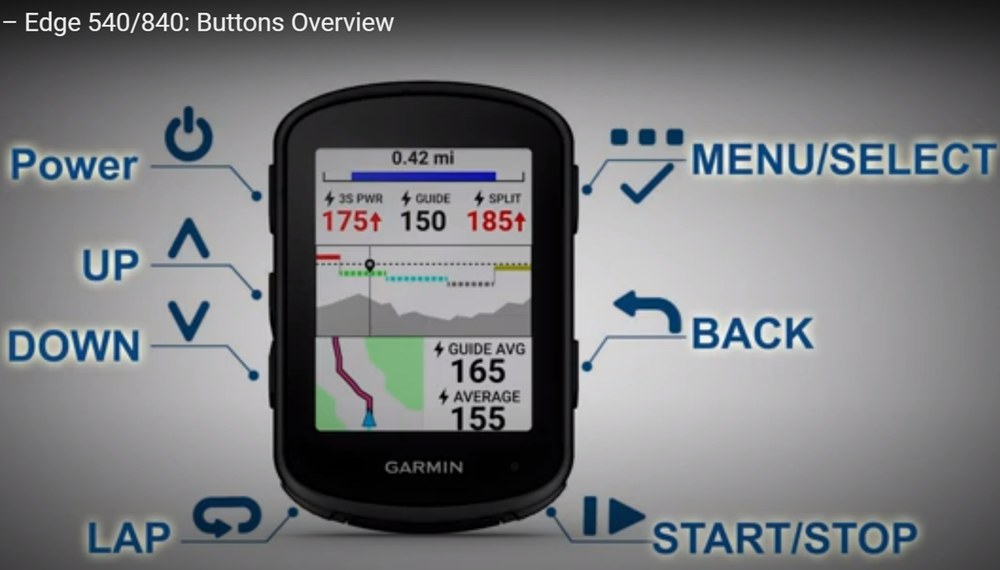
| Buttons | Power, Up, Down, Lap, Start/Stop, Menu/Select, Back |
| Screen 1 | Speed, heart rate, distance, timer, front gear, rear gear |
| Screen 2 | Lap distance, lap time, grade, elevation, ascent remaining, total ascent |
| Screen 3 | Heart rate, percent of max, cadence, time of day, battery level, Di2 battery |
| Di2 shifter buttons | Left shifter: press for previous page, double press for the map, hold for next page. Right shifter: press for next page, double press for the elevation profile, hold for previous page |
| Other pages | Map, elevation, ClimbPro (during a climb), lap summary, workout, segment, stamina, solar, eBike metrics; Power Guide is unused because there is no power meter |
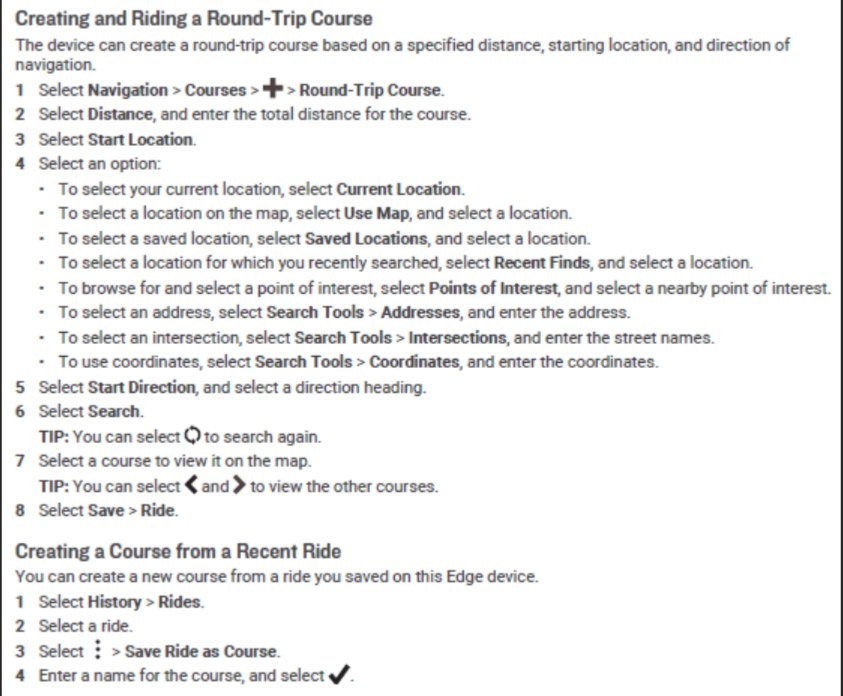
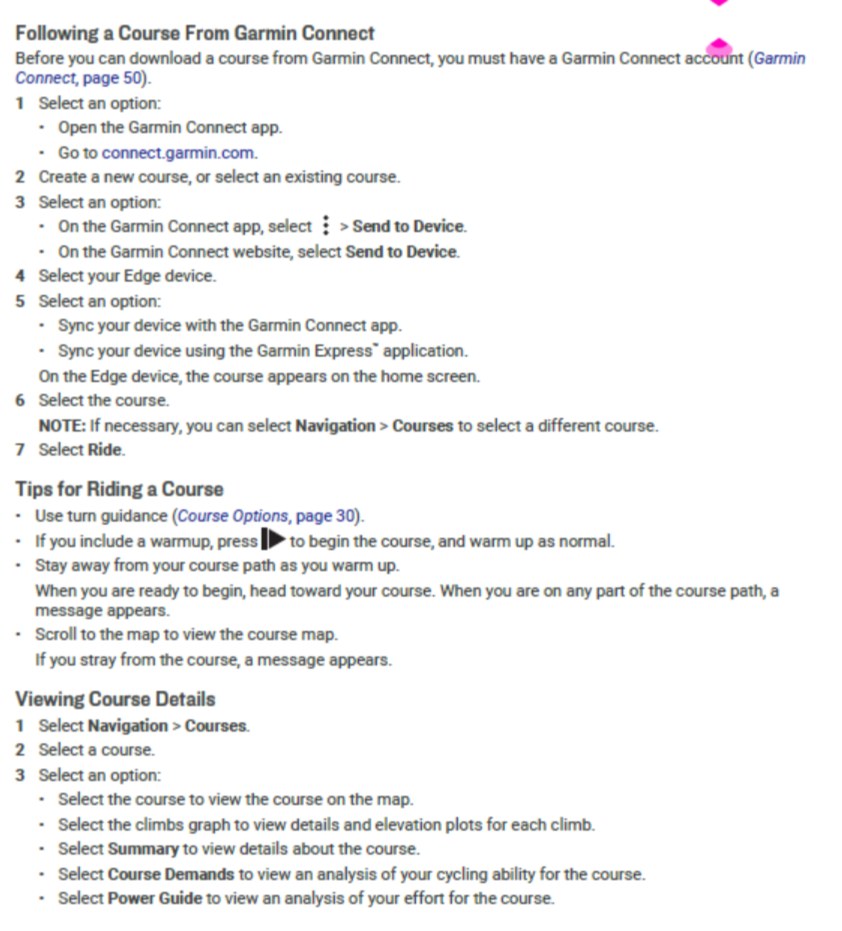
The Edge can create a round-trip course from a distance, start location and direction: Navigation > Courses > Round-Trip Course. It can also turn a saved ride into a course, or receive one sent from Garmin Connect: choose Send to Device in the app, sync the Edge, pick the course, then select Ride. The shift mode can be changed from Settings > Sensors > Di2 > Sensor Details > Shifting Mode.


The short version. The S5 and the Caledonia-5 are fully integrated. The bike computer on each handlebar talks to the bike’s Shimano Di2 electronic drivetrain, so the screen shows the current front and rear gear and the Di2 battery level. The Karoo also shows the shift mode, and both computers can change the shift mode. On both bikes, the Di2 shifter buttons also flip the computer’s screens.
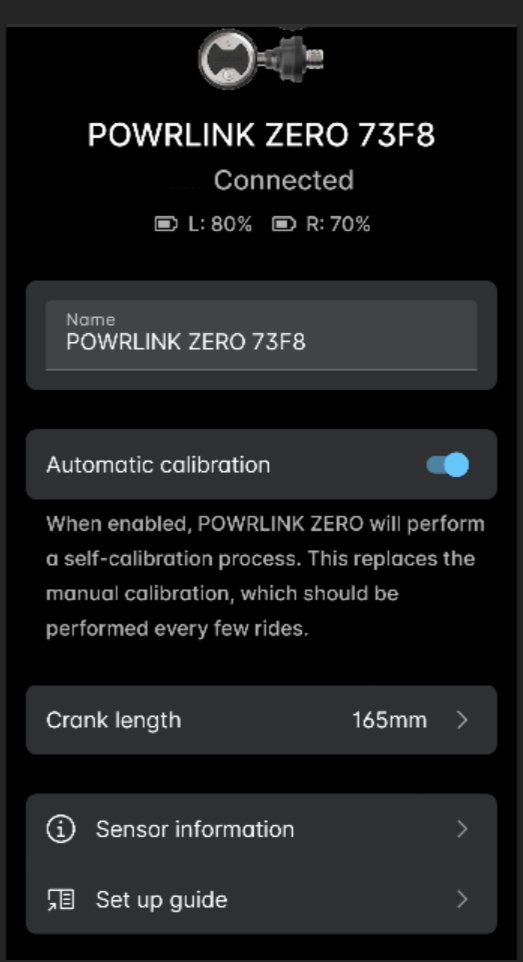
Sherwick’s S5 adds Wahoo power pedals. The left and right pedals each connect to the head unit on their own, so the computer receives power from each leg separately.
All the data from every ride can be downloaded to Garmin Connect and TrainingPeaks, as well as Strava.
S5
Caledonia-5
Power is how hard the rider pushes the pedals, measured in watts. Power balance shows how that effort is split between the left and right legs.
| Type | Dual-sided power pedals |
|---|---|
| Measures | Power, cadence and power balance, for each side |
| Accuracy | ±1% |
| Crank length | 165 mm |
| Calibration | Automatic: the pedals calibrate themselves, replacing manual calibration |
| Pairing | Wahoo app > Manage sensors > scroll down to the pedals (POWRLINK ZERO 73F8) |
| More | Pedals · Charging kit · Setup guide |


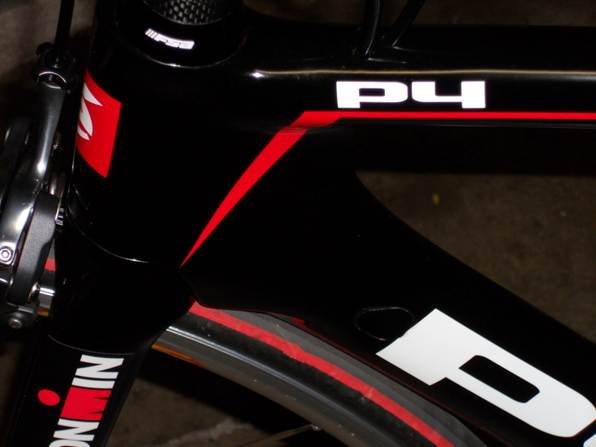
The short version. The P4 is a time-trial bike, made for racing alone against the clock, where drafting behind others is not allowed. Every tube is airfoil-shaped, the brake hardware is built into the frame, and there is a built-in drink system. A layer of Kevlar, the fiber used in body armor, reinforces the head tube area against impact. Small 650C wheels keep the rider low and compact.
| Group | Dura-Ace 7900, 10-speed |
|---|---|
| Crankset | 7900, 170 mm, 53/39 |
| Cassette | 7900, 11-25 (race and training) |
| Chain | Yumeya 7900 TiN, 10-speed |
|---|---|
| Pedals | Speedplay X/1 titanium |
| Race | HED H3 650C tubular, Vittoria Corsa Evo CX 21 mm tires (5.0 lb pair) |
|---|---|
| Training | Mavic Ksyrium Elite clincher, 18/20 spokes, Hutchinson 23 mm tires (5.5 lb pair) |
| Bars | Easton Attack TT 42 mm carbon integrated |
|---|---|
| Stem | 3T ARX Team 96°, 100 mm |
| Brake levers | Vision Tech aero |
| Seatpost | Cervélo Aero carbon |
| Frame | Cervélo Smartwall TrueAero tubes; ICS3 internal cable stops; integrated brake (IBT), hydration and seatpost clamp; dropped down tube; high- and ultra-high-modulus carbon strips against side bending |
|---|---|
| Geometry (48) | Stack 461 mm; reach 389 mm; head angle 72°; seat angle 78°; top tube 490 mm; bottom bracket drop 43 mm; standover 716 mm |
| Fork | FK25 carbon, 1-1/8" steerer |

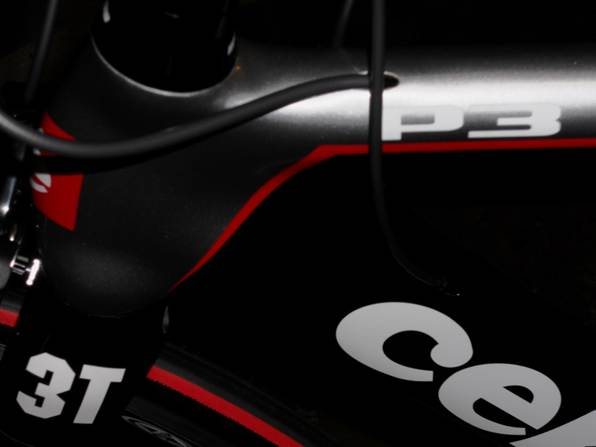
The short version. The P3 is the P4’s sibling. It uses the same frame shape and geometry, but skips the built-in brake and drink system, which makes it simpler. It weighs the same in race trim, so the extras on the P4 add no weight penalty on paper.
| Group | Dura-Ace 7900, 10-speed |
|---|---|
| Crankset | 7900, 170 mm, 53/39 |
| Cassette | 7900, 11-25 race or 12-25 training |
| Chain | Wippermann Connex stainless |
|---|---|
| Pedals | Speedplay X/2 stainless steel |
| Race | HED H3 650C tubular, Vittoria Corsa Evo CX 21 mm tires (5.0 lb pair) |
|---|---|
| Training | Easton Vista clincher, 20/24 spokes, Hutchinson 23 mm tires (6.0 lb pair) |
| Bars | Xentis Aero Base X1 IBL 39 mm with Aero Action X1 BES integrated carbon |
|---|---|
| Stem | 3T ARX Team 96°, 90 mm |
| Brake levers | Xentis carbon, integrated |
| Seatpost | Cervélo Aero carbon |
| Frame | Cervélo Smartwall TrueAero tubes; ICS3 internal cable stops; high- and ultra-high-modulus carbon strips; Kevlar in the head tube and down tube area |
|---|---|
| Geometry (48) | Same as the P4: stack 461 mm, reach 389 mm, 72°/78° angles |
| Fork | 3T Funda Pro carbon, 1-1/8" steerer |

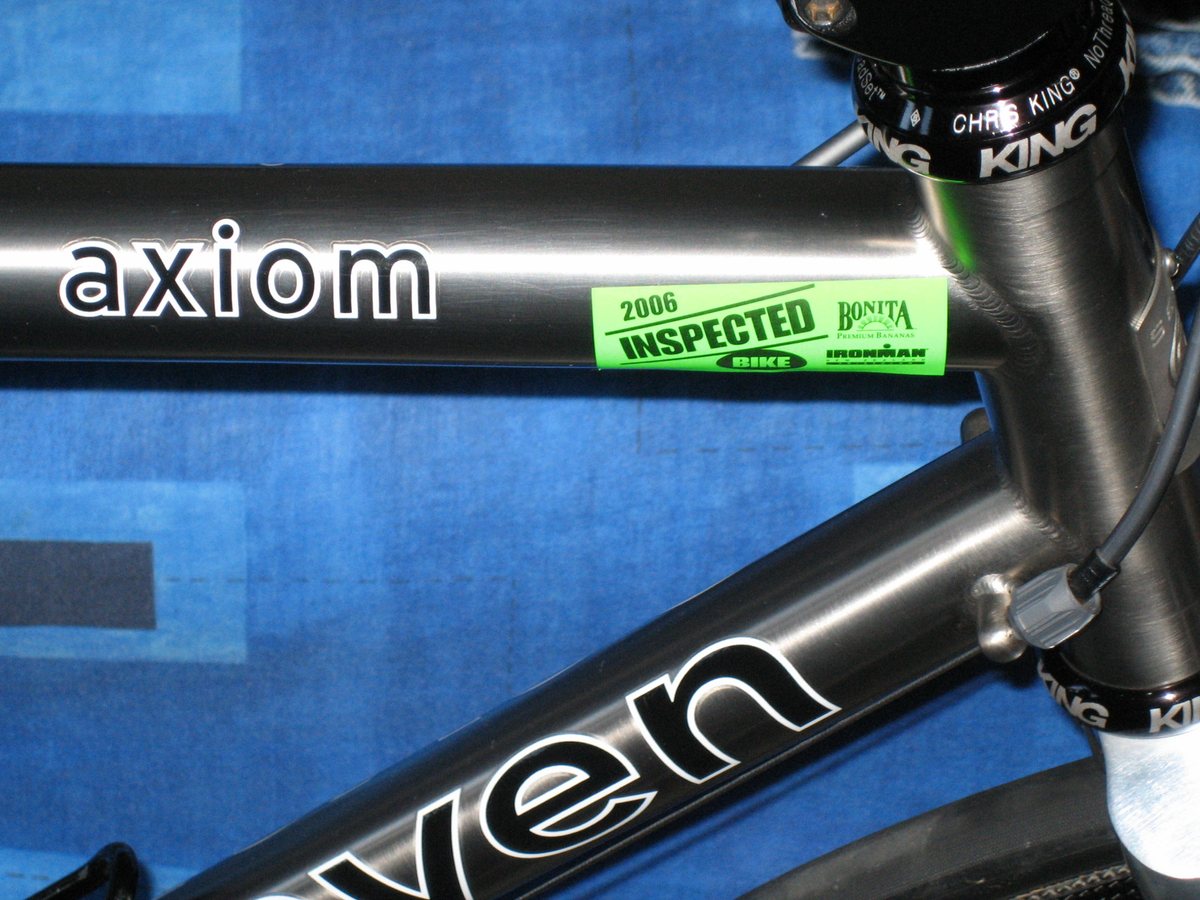
The short version. This is a custom-built bicycle from Seven Cycles, made to the rider’s measurements. It started life as a triathlon frame, and the inspection sticker shows it was checked in at an Ironman race in 2006. It has since been converted into a restored road bike with a mechanical Shimano drivetrain, meaning the gears shift through cables instead of electronics. The frame has a brushed, unpainted finish.
| Built as | Custom triathlon frame by Seven Cycles |
|---|---|
| Now | Restored road bike |
| Drivetrain | Shimano, mechanical shifting |
| Frame | Refurbish with new decals |
| Fork | Replacement planned; waiting-list lead time about 28 weeks |
| Headset | Chris King, replaced after corrosion damage |
| Bearings | Wheel bearings repacked; new bottom bracket |
| Fittings | Stripped bottle-cage bolts replaced; new titanium cages |
| Pedals | Wahoo pedals moved to the S5 |
The year, frame material, weight and full parts list are not in the source files. Add them here.

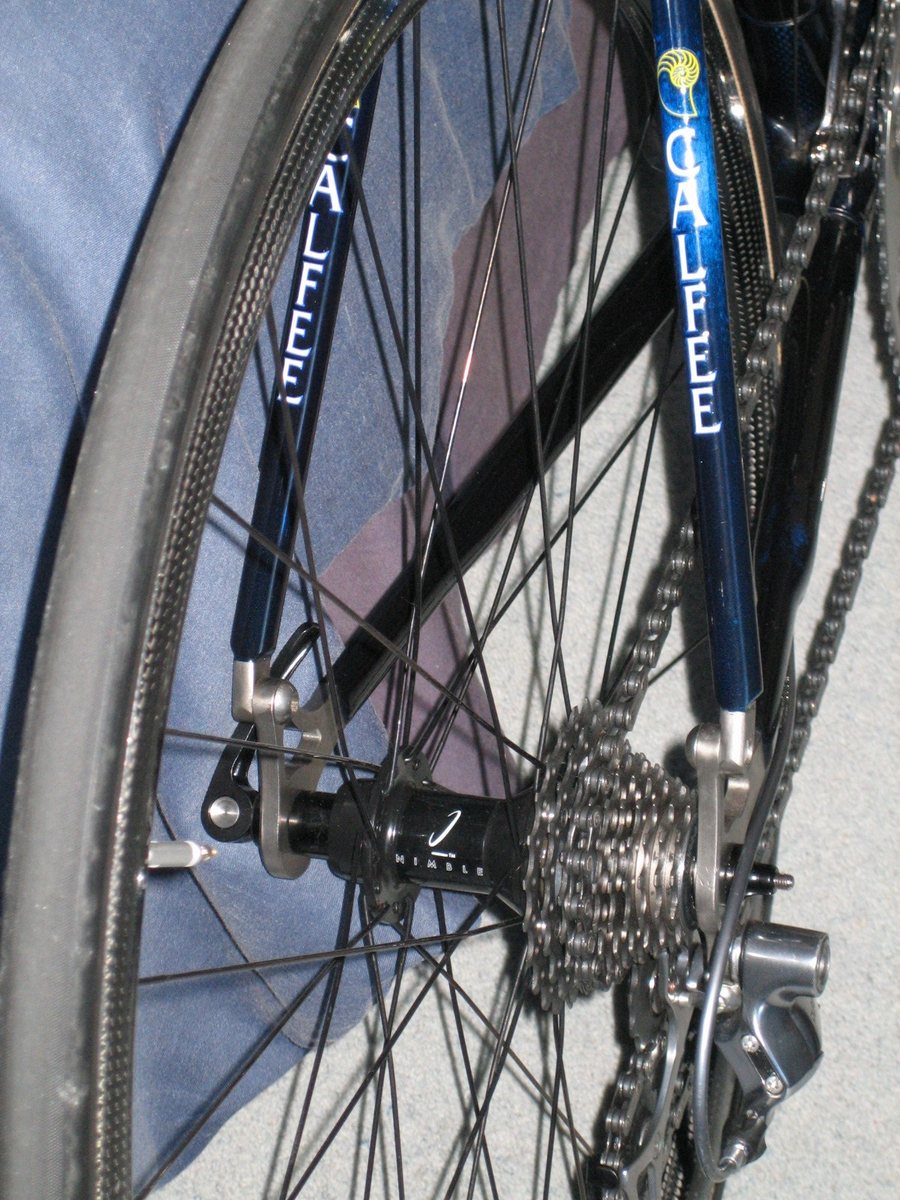
The short version. This is a carbon-fiber Calfee that was originally a triathlon bicycle. It has been converted into a road bicycle for Jami. Calfee Design is a small California builder known for hand-built frames. The bike has deep blue paint with white lettering and a woven carbon-fiber rim.
| Built as | Carbon-fiber triathlon bicycle |
|---|---|
| Now | Road bicycle, set up for Jami |
| Frame | Calfee carbon fiber, deep blue paint, white lettering and a nautilus-shell logo |
| Wheels | Carbon-fiber rim with a visible weave; black spokes |
| Hub | Himble |
The model, year, weight and full parts list are not in the source files. Add them here.